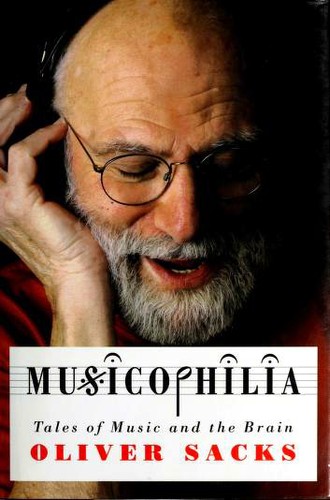
Your brain is never silent. Billions of neurons firing in coordination produce faint electrical rhythms that can be measured on the scalp with an EEG — and depending on how fast those rhythms oscillate, they're grouped into five bands, each associated with a different mental state. Understanding them is the key to understanding why the right piece of music can help you focus, wind down, or fall asleep.
The five brain wave bands
- Delta (0.5–4 Hz). The slowest waves, dominant during deep, dreamless sleep. Associated with physical restoration and the body's repair processes.
- Theta (4–8 Hz). Common during light sleep, deep meditation, and the drowsy state right before you drift off. Linked to creativity, intuition, and vivid imagery.
- Alpha (8–12 Hz). The signature of a relaxed but alert mind — eyes closed, calm, not actively problem-solving. Often described as the bridge between conscious thought and deeper relaxation.
- Beta (12–30 Hz). The default state of ordinary waking life: alert, engaged, actively thinking. Useful for focus and productivity, but sustained high beta activity is also linked to stress and anxiety.
- Gamma (30–100 Hz). The fastest, least understood band, associated with peak concentration, memory recall, and moments of insight.
How music actually affects the brain
Music doesn't just play in the background — it changes brain activity in measurable ways. Tempo, rhythm, and repetition can pull brainwave activity toward matching frequencies, a phenomenon broadly known as entrainment. A slow, steady, low-frequency track tends to nudge the brain toward calmer alpha or theta states; an upbeat, complex track tends to keep it in beta. Music also triggers dopamine release in the brain's reward pathways, which is part of why the right track can shift mood almost immediately, not just gradually over a listening session.
This is the idea behind most “focus,” “sleep,” and “calm” music: it's not just pleasant sound, it's sound engineered around the brainwave state you're trying to reach.
Binaural beats
Binaural beats are a specific technique for encouraging entrainment. Play a slightly different tone in each ear — say, 200 Hz in the left and 210 Hz in the right — and the brain perceives a third, phantom beat at the difference between the two: 10 Hz, squarely in the alpha range. The theory is that the brain's auditory processing “syncs” to that phantom frequency, nudging overall brain activity toward it. Binaural beats only work over headphones, since each ear needs to receive a distinct tone — through speakers, the two tones just blend together in the air before they reach you.
It's worth being honest about the evidence here: some studies show modest effects on relaxation, focus, or anxiety, while others find no measurable difference from a placebo track. Binaural beats aren't a guaranteed shortcut to a given mental state, but for many people they're a genuinely useful, low-effort tool worth trying — especially paired with something you're already doing, like studying, meditating, or winding down for sleep.
Solfeggio frequencies
Solfeggio frequencies are a different, older tradition: a set of six (sometimes nine) specific tones — 396, 417, 528, 639, 741, and 852 Hz are the most commonly cited — said to trace back to ancient chants and each associated with a particular effect, from grounding and stress relief to focus and intuition. 528 Hz in particular has picked up a reputation as the “love frequency,” often linked to healing and DNA repair claims that go well beyond what research actually supports.
Unlike binaural beats, Solfeggio tones aren't built on a specific neuroscience mechanism — there's no direct evidence that a single tone at 528 Hz does something a similarly pleasant tone at 520 Hz wouldn't. What does hold up is the more general finding that calm, resonant, sustained tones can support relaxation the same way ambient music or nature sounds do. Treat the specific numbers as a framework worth exploring rather than a proven mechanism, and judge each track by how it actually makes you feel.
Putting it into practice
You don't need to memorize frequency ranges to benefit from any of this. In practice, it comes down to matching the music to the state you want: slower, sparser, lower tracks for winding down or meditating; more rhythmic, engaged tracks for focus. Binaural beats and Solfeggio tones are both worth experimenting with as part of that toolkit — headphones on, one track at a time, paying attention to what actually shifts how you feel.